Rust as a Solo Player in 2026 and What Blooprint's Apex Survivor Movie Proves About Surviving a Long Wipe
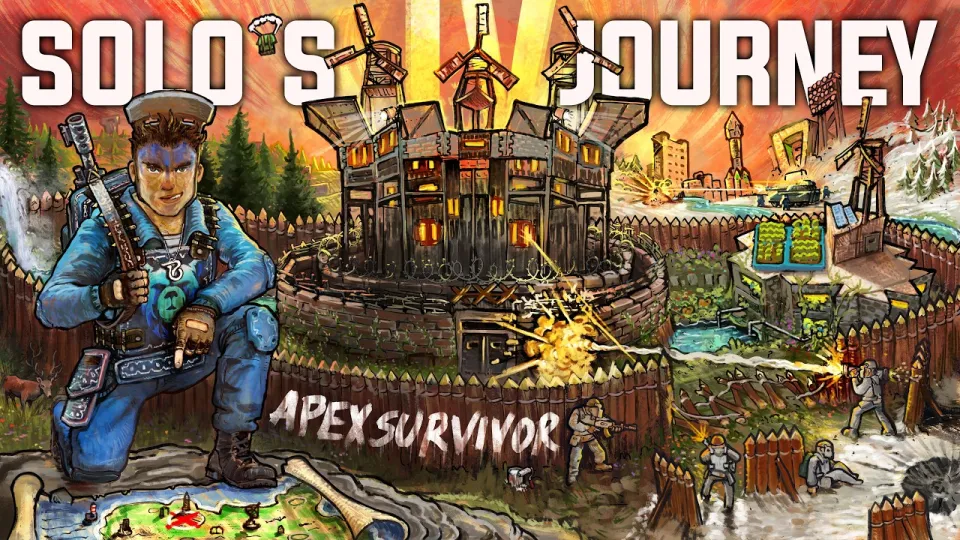
Video: Rust - A Solo's Journey IV: Apex Survivor (Movie)
Need articles like this for your video? They help promote it on YouTube and Google — order them in the Telegram bot @sat_sit_bot. The bot writes and publishes the articles itself (with your YouTube video embedded) on popular topical websites (no ads). Try it free: 50 articles on us.
· based on the channel Blooprint
Rust solo survival in a long wipe comes down to pacing: one player has to secure a base, farm resources, avoid unnecessary fights and still find windows for PvP and raids. Blooprint's movie "A Solo's Journey IV: Apex Survivor" documents exactly that over 14 days of solo play, and the companion progress tracker site lets viewers type in a timestamp and see the creator's state at that moment. The film runs close to five hours and was assembled from more than 300 hours of filming and editing.
What the Apex Survivor movie actually covers
The movie is a structured solo Rust run rather than a highlight reel, and its chapter layout shows how a long wipe unfolds. The release is divided into an introduction, twelve numbered chapters and a final "The End" segment, with the first chapter starting at 1:55 and the closing section beginning at 4:47:05. That structure maps onto the natural arc of a wipe: early spawn and base placement, mid-wipe farming and gear progression, then monument runs, PvP encounters and raids once the base and loot are established.
For a solo player, the value is in the ordering. Nothing in the run happens in isolation: a base decision made in the first hour determines how exposed the player is during the next several days, and a raid launched too early can hand a neighbor free loot. The movie's length is the point, because it preserves the boring middle parts that most edited Rust videos cut out.
Why 14 days of solo Rust is a different challenge
A long solo wipe is a test of resilience more than raw aim, because there is no teammate to cover a farm run, repair a base or hold a door while the other player crafts. Solo players on a populated server face three persistent pressures:
- Base security. A compact, cheap-to-upkeep base limits how much a raider can gain and how often the owner must rebuild.
- Farm efficiency. Every sulfur and metal run has to be timed around server activity, and losing a full inventory hurts far more without clanmates to replace it.
- Social exposure. Neighbors remember who raids whom; a solo player who picks fights carelessly ends up with several groups looking for revenge.
The movie's framing as a survival challenge rather than a PvP montage reflects that reality. Surviving two weeks solo is mostly about not losing everything in a single bad decision.
Base design, farming and the triangle core debate
Base choices in solo Rust are a trade-off between raid cost and daily usability, and viewers of the movie spent a lot of attention on the base itself. One widely liked comment argued that a triangle core layout is not the meta but still paid off, calling the build an excellent farm base and praising the cloning work. That is a fair summary of how solo bases usually work: unusual layouts can be strong when they are cheap, fast to expand and awkward for a raider to path through.
A practical solo base checklist looks like this:
- Keep the footprint small enough that upkeep stays affordable on a single player's farm.
- Separate loot from the core so a single breach does not expose everything.
- Build near a monument or road route that supports quick, repeatable farm runs.
- Leave room for expansion, since a 14-day wipe will outgrow the starter design.
- Use cloning and farming setups to reduce time spent gathering and increase time spent playing.
PvP, raids and the revenge economy of a long wipe
Solo PvP in Rust is rarely about winning every fight; it is about choosing fights that pay. The movie's later chapters lean into raids and retaliation, and the audience response shows how much viewers invest in those storylines. Comments celebrated a clan that took out the player's neighbors, cheering a deserved raid after seeing the group moving across the map, and others joked about a specific flick during a fight. That mix of tension and payback is what makes a long wipe watchable.
For players trying the same thing, the useful lessons are unglamorous: scout a target before spending sulfur, keep a fallback stash for gear after a failed raid, and expect that any raid creates a returning enemy. On a two-week wipe, reputation matters as much as explosives.
Common questions from viewers of the solo journey
Viewers of long Rust movies tend to raise the same practical points, and they are worth addressing directly.
- Is a five-hour video watchable in one sitting? Many viewers split it across days or watch in the background while doing something else; the chapter markers and the timestamp tracker exist precisely to support that.
- Does solo play require top-tier PvP skill? The run suggests otherwise: positioning, base discipline and knowing when to disengage matter more than winning every aim duel.
- Are the big set pieces staged? The movie is presented as a genuine 14-day solo run on a live server, with the editing and cinematic work layered on top of recorded gameplay.
- What about the community around the server? Several comments note friendly or at least non-toxic interactions with other players, which is a reminder that server culture shapes a solo wipe as much as individual skill.
Useful links
- Solo's Journey progress tracker — enter a timestamp to see the creator's progress during the challenge.
- Blooprint Youtooz vinyl figure — limited 2.5M subscriber merch, available until October 27, 2026.
- Blooprint mousepads and playmats — available until January 3, 2027.
- Hires Studio — animated intro work for the movie.
- Veys — thumbnail artist for the release.
Final thoughts on solo Rust and the Apex Survivor run
Blooprint's Apex Survivor movie is the clearest recent argument that solo Rust is a planning game disguised as a shooter: base layout, farm routes, raid timing and restraint decide more than raw aim. The 14-day format and near five-hour runtime let the whole arc breathe, from starter base to late-wipe retaliation, which is why viewers describe it as a series finale rather than a gameplay clip. Anyone preparing for a long solo wipe can use the checklist tracker to follow the same milestones in order. The film is a Blooprint production, edited and filmed by the channel itself, and it stands as a useful reference for how a solo run should be structured.
Key takeaways
- Blooprint's "A Solo's Journey IV: Apex Survivor" covers 14 days of solo Rust in a single movie of roughly 4 hours 50 minutes.
- The project took well over 300 hours of filming and editing and was released to mark 2.5 million subscribers on the channel.
- A companion site at solosjourneytracker.com lets viewers enter a timestamp and see the creator's progress at that point.
- The movie is split into 12 chapters plus an introduction and ending, from early base building to late-wipe raids.
- Solo play on a long wipe means no clan support: every farm run, defense and raid has to be planned by one player.
Source: Rust - A Solo's Journey IV: Apex Survivor (Movie) · Markdown version
Questions & answers
How long is Blooprint's Apex Survivor Rust movie?
The movie runs about 4 hours 50 minutes, split into an introduction, twelve numbered chapters and a closing segment. It covers 14 days of solo Rust and was built from more than 300 hours of filming and editing. Chapter markers make it easy to watch across several sessions.
What is solosjourneytracker.com used for?
It is a companion site for the solo journey series where viewers enter a timestamp from the video and immediately see the creator's progress at that point. It is especially useful when watching the movie in multiple parts. The link is shared in the video description and by the creator in the comments.
Can a solo player survive a full Rust wipe without a clan?
Yes, but the approach differs from group play: keep the base small and affordable, farm in short efficient runs, and avoid fights that do not pay. The movie shows that discipline and timing matter more than constant PvP. Losing one big fight or farm run hurts much more without teammates to recover the loss.
Is the triangle core base good for solo Rust?
Viewers of the movie debated this, noting that a triangle core is not strictly meta but performed well as a farm base. For solo players the priority is a cheap, expandable layout with separated loot rather than a perfect meta design. A base that is fast to build and awkward to raid often beats an expensive blueprint.